Incident General Settings
Organization-wide rules for incidents and dispatch.
Where: IncidentsGeneral Settings
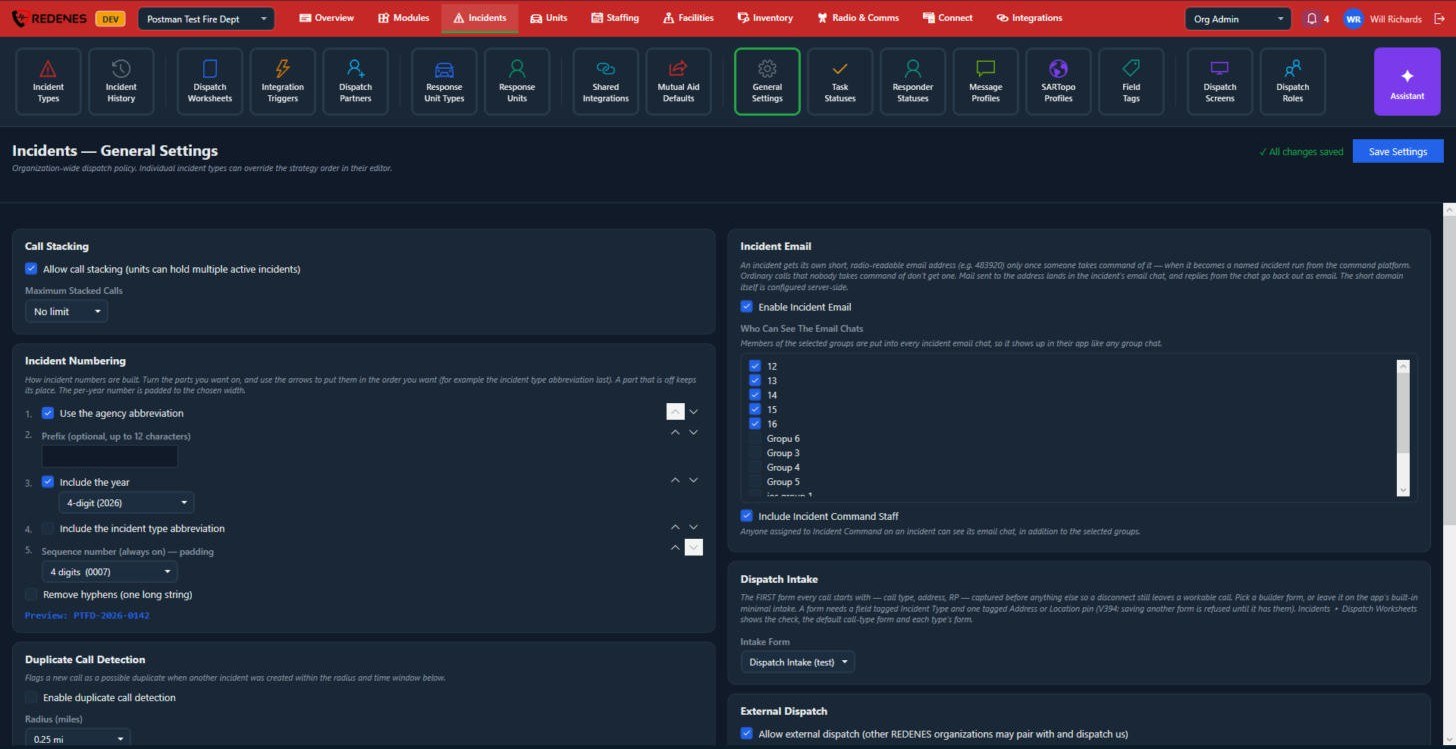 123456
| Box | What it sets |
|---|---|
| Call Stacking 1 | Whether a unit can hold several active incidents, and how many. |
| Incident Numbering 2 | How incident numbers are built: agency abbreviation, an optional prefix, the year, the incident type abbreviation and the running number. Use the arrows to reorder the parts. The Preview shows the result. |
| Duplicate Call Detection 3 | Flags a new call as a possible duplicate when another incident was created within a distance and time you choose. |
| Incident Email 4 | Gives an incident its own short email address once someone takes command. Mail sent to it lands in the incident's email chat, and replies from the chat go back out as email. Tick the groups that should see those chats. |
| Dispatch Intake 5 | The first form every call starts with. See Dispatch Worksheets. |
| External Dispatch | Whether other REDENES organizations may pair with you and dispatch your agency. |
Individual incident types can override some of these in their own editor. Click Save Settings 6 when you are done.
Further down the page
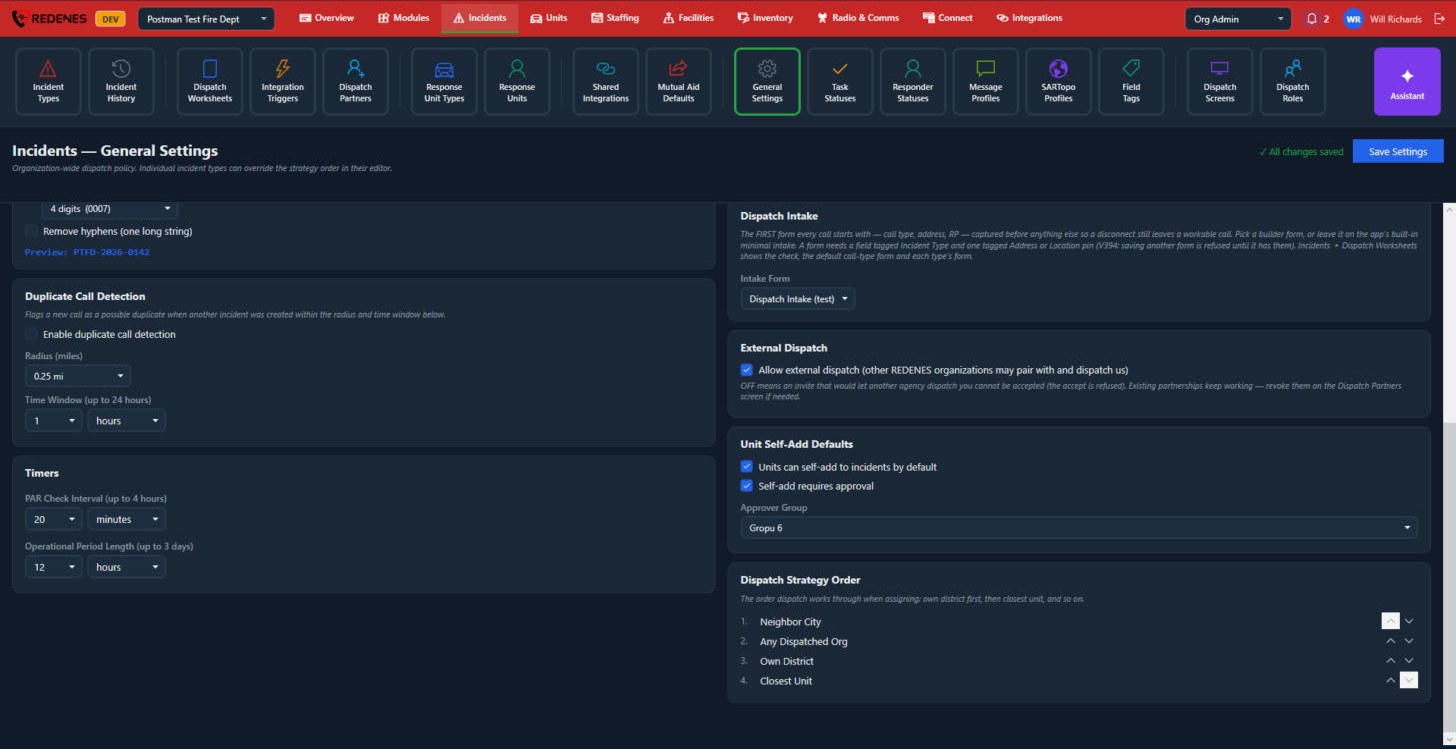 12345
| Box | What it sets |
|---|---|
| Duplicate Call Detection 1 | Tick it, then set the Radius and the Time Window in which a second call counts as a possible duplicate. |
| Timers 2 | The PAR Check Interval, which is how often command is reminded to check on its crews, and the Operational Period Length. |
| External Dispatch 3 | When it is off, an invitation from another agency to dispatch you cannot be accepted. Partnerships you already have keep working. |
| Unit Self-Add Defaults 4 | Whether units may add themselves to incidents, whether that needs approval, and the group that approves. |
| Dispatch Strategy Order 5 | The order dispatch works through when it suggests units: own district, closest unit and so on. Use the arrows to reorder. |
Under Incident Numbering, Remove hyphens writes the number as one long string, and the sequence number can be padded to a fixed number of digits.